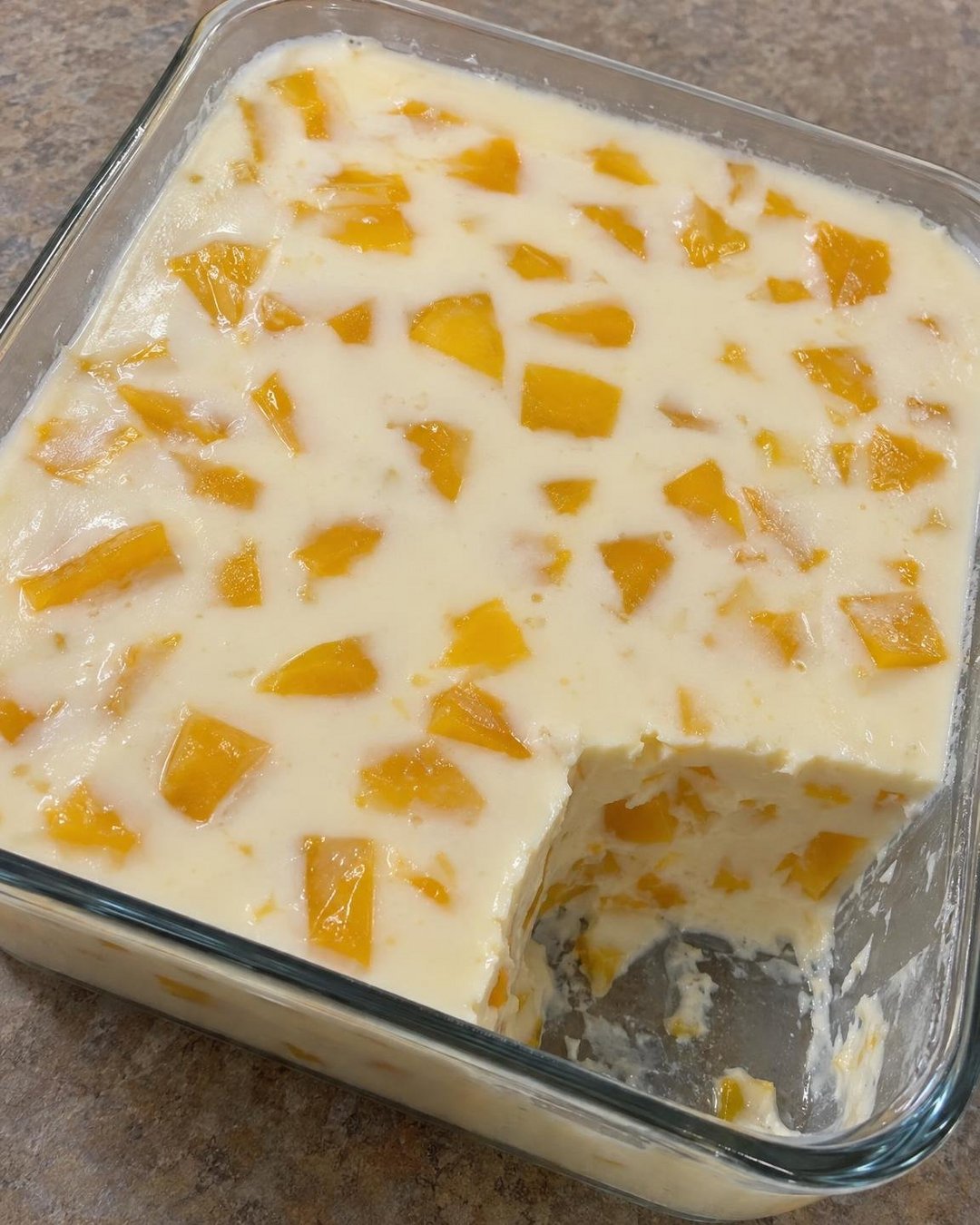
Ingredients
Method
- Pour 1/2 cup cold water into a small heatproof bowl. Sprinkle 21 grams unflavored powdered gelatin evenly over the surface rather than dumping it into one mound. Leave for 5–10 minutes, until the water is absorbed and the gelatin looks swollen throughout.
- While the gelatin hydrates, drain the canned mango in a strainer, excluding its packing liquid from the recipe. Cut the fruit into roughly 1/2-inch pieces, let excess liquid drain away, then measure the drained fruit. Set an 8-inch square, 2-inch-deep baking dish on a level surface.
- Warm 12 fluid ounces evaporated milk in a medium saucepan over medium-low heat for about 3–5 minutes, stirring, until steaming lightly but not simmering. Remove from the heat and add the hydrated gelatin. Stir gently until completely dissolved, with no visible granules or rubbery pieces. If needed, return briefly to low heat while stirring; do not boil.
- Whisk 14 ounces sweetened condensed milk, 1 cup whole milk and 1 teaspoon vanilla extract into the warm gelatin mixture until evenly combined, avoiding vigorous whisking that creates foam. Let cool for about 15 minutes, stirring occasionally, until no warmer than lukewarm and still freely pourable.
- Fold 1 1/2 cups canned mango into the milk base. Pour into the baking dish, scraping the saucepan with a spatula. Gently move the fruit around to distribute it across the dish; some pieces may rise or settle as the gelatin sets.
- Cover without touching the surface and refrigerate on a level shelf for at least 8 hours. The center should move with a gentle, cohesive wobble when the dish is nudged, without a liquid ripple. If it is still fluid, continue refrigerating until fully set. Cut into portions in the dish or scoop with a serving spoon, and serve cold.
Notes
Equipment: 8-inch square baking dish, at least 2 inches deep; Small heatproof bowl; Medium saucepan; Whisk; Flexible spatula; Fine-mesh strainer; Measuring cups; Kitchen scale
Allow 15 minutes for the milk mixture to cool and at least 8 hours for refrigeration. Gelatin hydration overlaps with fruit preparation. A deeper dish or an especially cold milk mixture may change the cooling and setting times.
Keep covered and refrigerated at 40°F or below. Making the dessert the day before serving allows ample setting time.
For conservative home planning, use within 3 days of preparation. Keep portions covered to limit drying and refrigerator odors.
Do not freeze; thawing can cause liquid separation and an uneven texture. Serve cold rather than reheating.
Limit cumulative time outside refrigeration to 2 hours, or 1 hour when the surrounding temperature exceeds 90°F. A firm gelatin set does not make the dairy dessert safe at room temperature.
Use clean hands, utensils and preparation surfaces, and keep this ready-to-eat dessert separate from raw meat and its juices.
Do not add raw pineapple, papaya, kiwi or figs to this formulation; their enzymes can prevent the gelatin from setting.