Ingredients
Method
- Using a sharp knife, cut 2 to 3 small slits (about 1 inch long) evenly around the outer edge of each bologna slice. This prevents the bologna from puffing up while it fries.
- Heat a large skillet or cast iron pan over medium-high heat for about 1 to 2 minutes until very hot. Lightly coat the pan with cooking spray or add ½ teaspoon of vegetable oil and swirl to coat.
- Working in batches if needed, add the bologna slices to the hot pan in a single layer. Cook for 2 to 3 minutes without moving them, until the bottom is deep golden brown and the edges are crispy and slightly caramelized.
- Flip each slice and cook for another 2 minutes. If adding cheese, place one slice of American cheese on top of each bologna slice, cover the pan loosely with a lid, and cook for 30 additional seconds until the cheese is fully melted. Remove from the pan and set aside.
- Reduce the heat to medium. Add ½ tablespoon of butter to the same pan and let it melt until foamy. Place 4 slices of bread butter-side down in the pan and toast for 1 to 2 minutes until lightly golden. Repeat with remaining butter and bread slices.
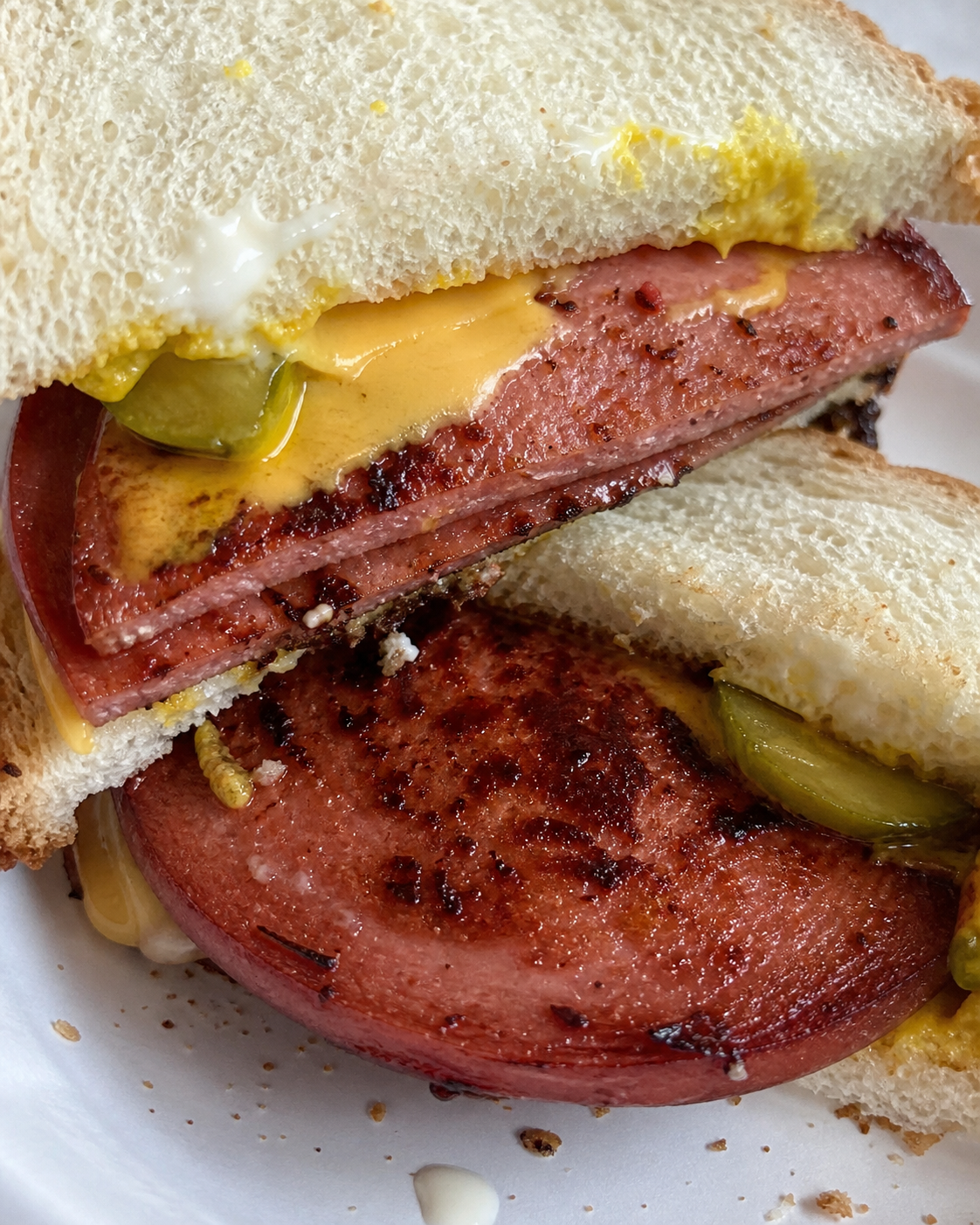
- Spread yellow mustard and mayonnaise onto the toasted bread slices. Top 4 slices with 2 pieces of fried bologna each (with melted cheese if using), then add dill pickle slices, shredded lettuce, and sliced tomato. Sprinkle lightly with black pepper, top with the remaining bread slices, and serve immediately.
Nutrition
Notes
Storage: Store leftover fried bologna slices (without toppings or bread) in an airtight container in the refrigerator for up to 3 days. Reheat in a skillet over medium heat for about 1 minute per side to restore crispiness before assembling your sandwich.
Lighter swap: To make these a bit more nutritious, look for a turkey bologna or chicken bologna at the deli counter — they are lower in fat and saturated fat than traditional pork bologna while still frying up beautifully with crispy edges. Serve on whole wheat bread for added fiber!
Sodium tip: Bologna is naturally high in sodium, so taste everything before adding any extra salt. Using unsalted butter for toasting the bread helps keep the overall sodium level in check without sacrificing any flavor.