Ingredients
Method
- Heat a large deep skillet or Dutch oven over medium-high heat. Add the ground beef and diced onion and cook, breaking up the meat, for 6 to 8 minutes until the beef is fully browned and the onion is softened. Drain any excess grease.
- Add the minced garlic and cook for 1 minute, stirring constantly, until fragrant. Add the tomato paste and stir to coat the meat, cooking for 2 minutes until it begins to caramelize slightly on the bottom of the pot.
- Pour in the crushed tomatoes and beef broth. Stir in the Italian seasoning, red pepper flakes (if using), salt, and black pepper. Bring the mixture to a gentle boil over medium-high heat.
- Add the broken lasagna noodle pieces to the pot, stirring to submerge them as much as possible in the liquid. Reduce heat to medium, cover the pot, and cook for 18 to 20 minutes, stirring every 4 to 5 minutes, until the pasta is tender and the sauce has thickened. Add a splash more broth if the sauce becomes too thick before the pasta is done.
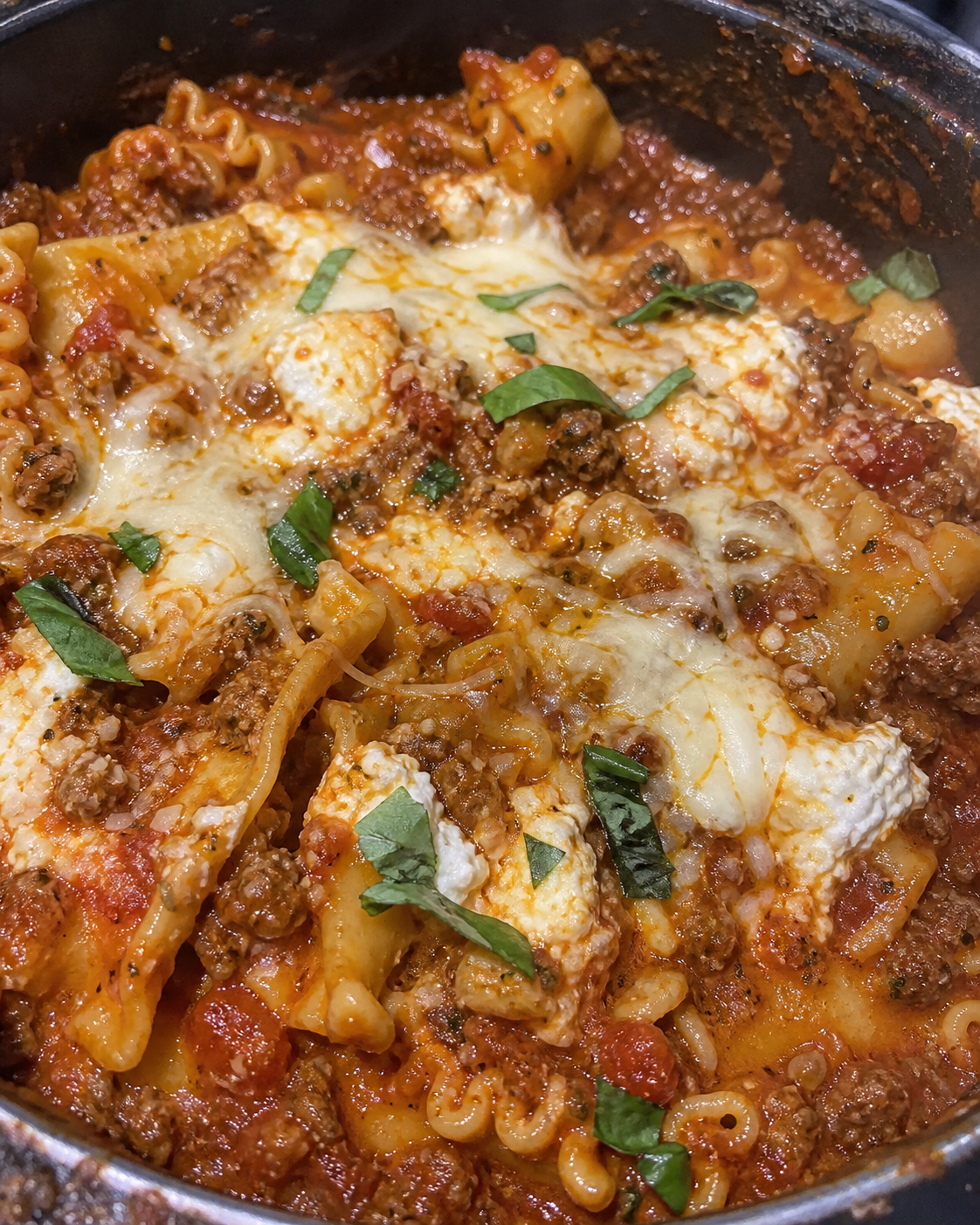
- Remove the pot from heat. Drop spoonfuls of ricotta cheese over the top and gently swirl it through the sauce a few times, leaving creamy pockets throughout. Sprinkle the shredded mozzarella and Parmesan cheese evenly over the top.
- Cover the pot for 2 to 3 minutes to melt the cheese, or place under the broiler on high for 2 to 3 minutes for a golden, bubbly top. Taste and adjust seasoning as needed. Garnish with fresh parsley or basil and serve immediately.
Nutrition
Notes
Storage: Store leftovers in an airtight container in the refrigerator for up to 4 days, or freeze in individual portions for up to 3 months. Reheat on the stovetop over medium-low heat with a splash of broth or water to loosen the sauce.
Lighter swap: Substitute lean ground turkey or ground chicken for the beef to reduce the saturated fat content while keeping all the nutritious, protein-packed goodness. Italian turkey sausage also works wonderfully here.
Sodium tip: Use low-sodium crushed tomatoes and low-sodium beef broth to better control the salt level, then season to taste at the end. This is especially helpful if you're cooking for little ones or watching your sodium intake.