Ingredients
Method
- In a small bowl, combine the warm water, yeast, and 1 teaspoon of the sugar. Stir gently and let sit for 5-10 minutes until foamy and bubbly. If it does not foam, your yeast is not active — start with a fresh packet.
- In the bowl of a stand mixer fitted with the dough hook (or a large mixing bowl), combine the warm milk, remaining sugar, 6 tablespoons softened butter, eggs, and salt. Mix until combined.
- Pour in the yeast mixture and stir to incorporate.
- Add the flour 1 cup at a time, mixing after each addition, until a soft dough forms. The dough should be slightly tacky but pulling away from the sides of the bowl.
- Knead on medium speed for 6-8 minutes (or by hand on a lightly floured surface for 8-10 minutes) until the dough is smooth, soft, and elastic.
- Place the dough in a lightly greased bowl, cover with a clean kitchen towel or plastic wrap, and let rise in a warm place for 1 to 1½ hours until doubled in size.
- Punch down the dough and turn it out onto a lightly floured surface. Divide into 15 equal pieces (about 2.5 oz each). Shape each piece into a smooth ball by tucking the edges underneath and pinching at the bottom.
- Place rolls into a greased 9x13-inch baking dish. Cover and let rise for another 45 minutes to 1 hour until puffed and touching.
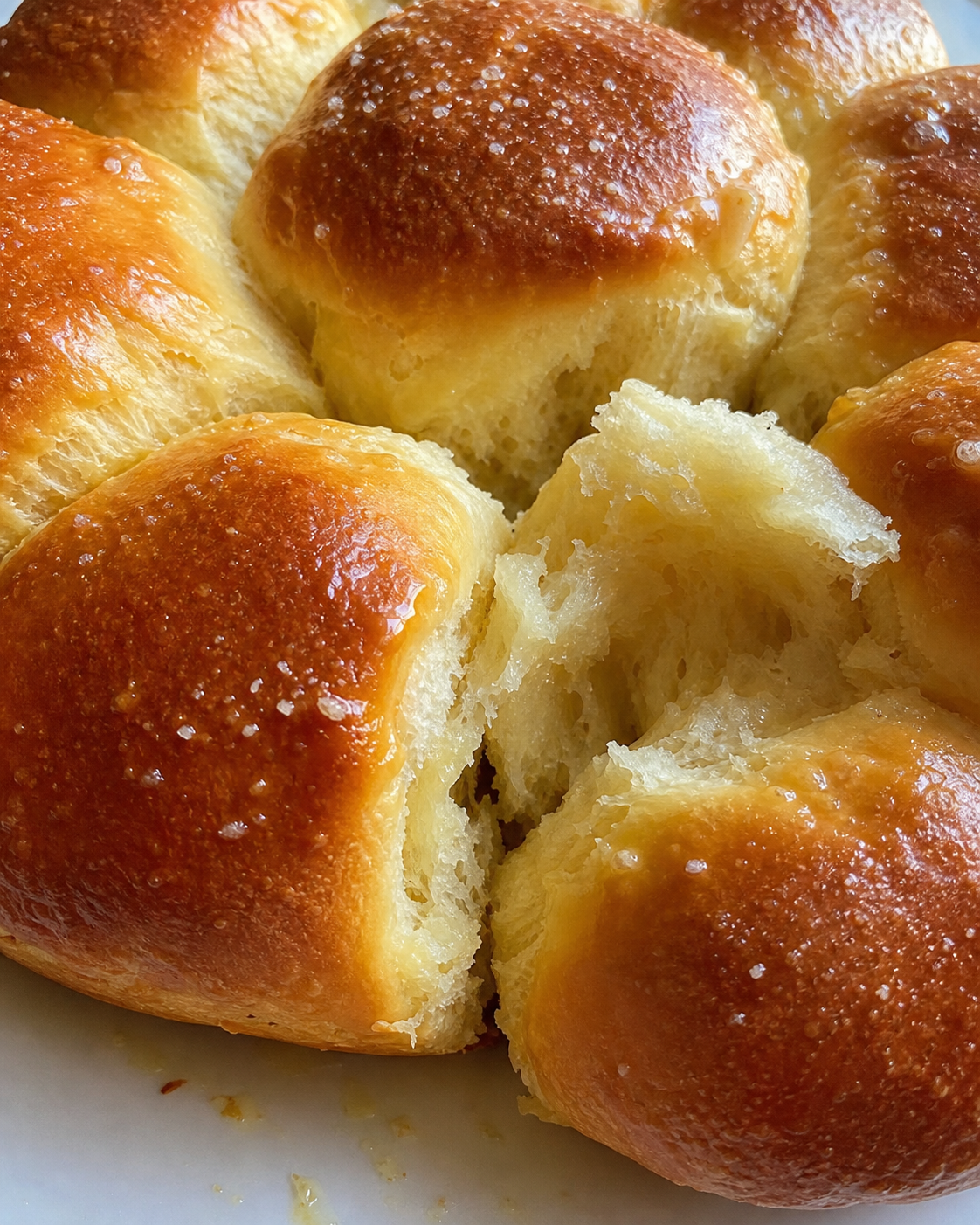
- Preheat oven to 375°F. Bake rolls for 18-22 minutes until deeply golden on top.
- Immediately brush the warm rolls with the 2 tablespoons of melted butter. Serve warm and enjoy!
Nutrition
Notes
Storage: Store rolls in an airtight bag or covered container at room temperature for up to 3 days. Do not refrigerate — this dries them out quickly. For longer storage, freeze baked rolls (cooled completely) for up to 3 months and reheat in a 300°F oven for 10 minutes.
Make Ahead: After shaping the rolls and placing them in the pan, cover tightly with plastic wrap and refrigerate overnight. The next day, let them sit at room temperature for 1 hour to finish rising before baking as directed.
Flour Tip: Spoon your flour into the measuring cup and level it off — do not scoop or pack it in. Packed flour will result in dense, heavy rolls. For the softest rolls possible, adding flour gradually and stopping as soon as the dough is no longer sticky is key.