
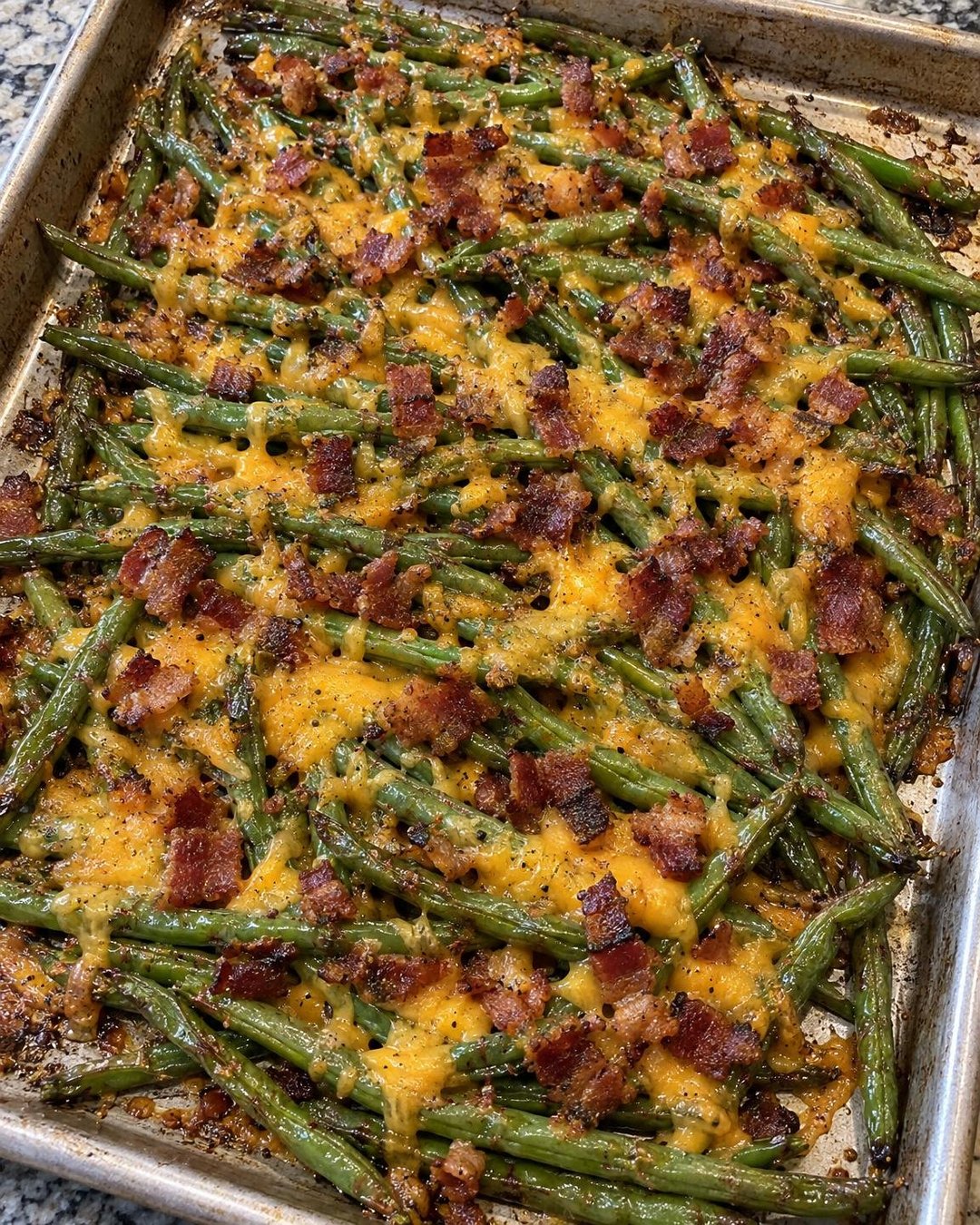
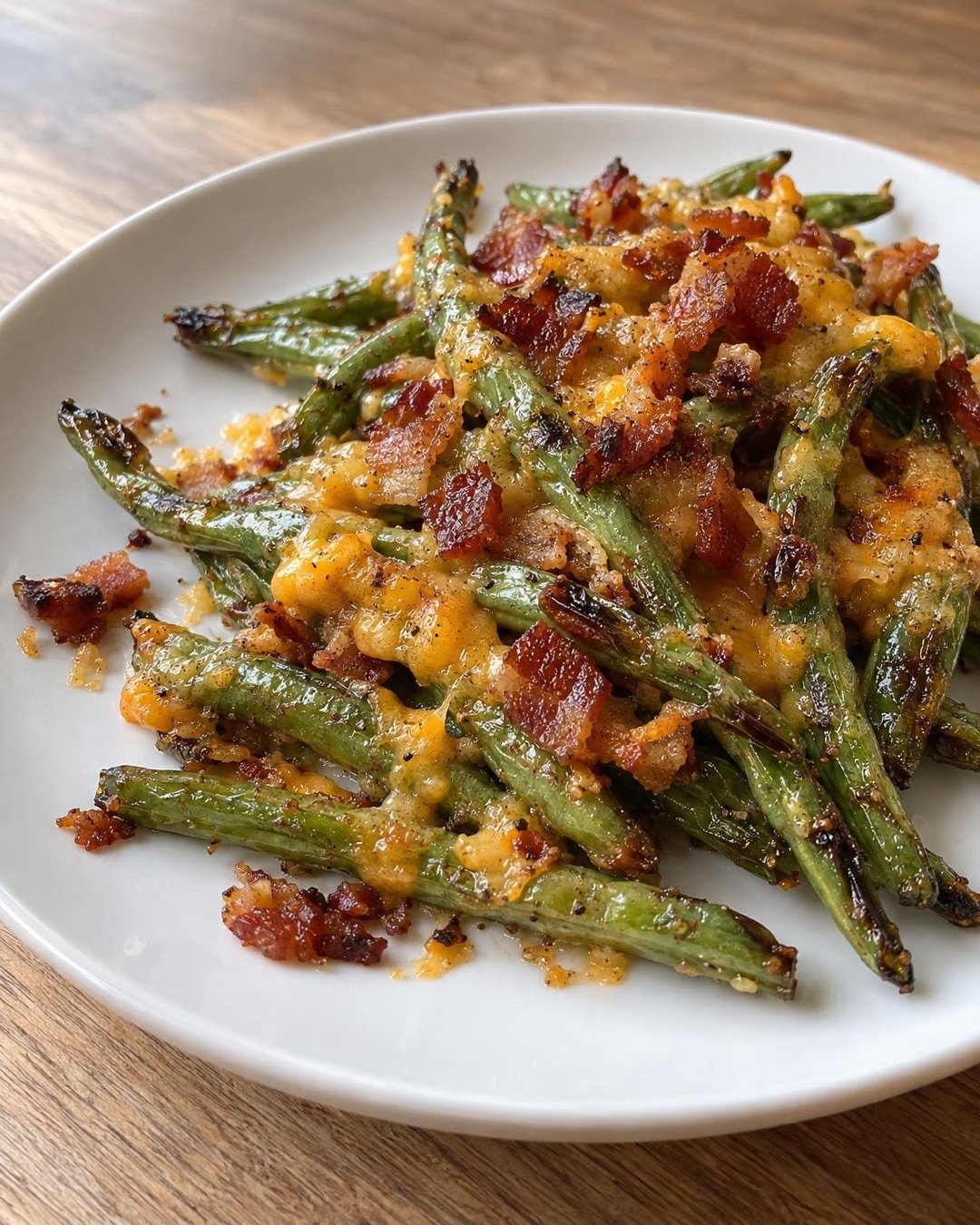
Loaded green beans can mean a few different things, from a creamy baked casserole to something much simpler. This version takes the simpler road. Fresh green beans roast in a hot oven until they pick up a few browned spots, then get a blanket of sharp Cheddar and chopped crisp bacon for the last few minutes.
There's no canned soup, no sauce and no fried onions here. What you get is a side dish that still tastes like vegetables, with salty, smoky, cheesy bits clinging to every forkful. The bacon cooks on the stove while the oven heats, so the whole thing comes together without much juggling.
Why You’ll Love This Recipe
- Roasted flavor instead of a heavy sauce: High oven heat gives the beans a little color and a deeper, toasty flavor, and without a creamy base the topping doesn't weigh them down.
- The topping stays where it belongs: Cheese goes on first and bacon on top, so the Cheddar melts around the beans and helps hold the bacon in place instead of leaving it scattered on the pan.
- Easy to get ahead: You can trim the beans and cook the bacon a day early, which makes this practical for a busy evening or a holiday meal when oven time is tight.
- Simple pantry seasoning: Olive oil, garlic powder and black pepper are all the beans need, since the bacon and cheese bring plenty of savory flavor of their own.
Ingredients and Helpful Notes
- bacon: Use raw, regular-cut bacon. It's measured by weight because slice sizes vary so much from brand to brand, and a kitchen scale takes the guesswork out of it. The recipe starts it in an unheated skillet over medium heat and cooks it until browned and crisp.
- shredded sharp Cheddar cheese: Sharp Cheddar has enough flavor to stand up to the bacon and the roasted beans. It goes on near the end, just long enough to melt.
- fresh green beans: Look for fresh, firm beans of similar thickness so they finish roasting at the same time. Thin and thick beans mixed together will leave you with some limp and some still crunchy.
- olive oil: Olive oil coats the beans so the seasoning sticks and the surfaces can brown in the oven. The rendered bacon fat is deliberately left out of the beans.
- garlic powder: Garlic powder adds a mellow garlic note and distributes evenly over the beans when you toss them with the oil.
- ground black pepper: Black pepper gives a little warmth that balances the richness of the cheese and bacon.
- salt: Go easy here. The bacon and Cheddar both add salt, so a light sprinkle on the beans is usually enough.
How to Make Loaded Green beans
Get the oven heating before anything else, then start the bacon in a cold skillet so both are ready at about the same time. While the bacon cooks, rinse, trim and dry the beans. Keep separate tongs and a clean board on hand for the cooked bacon so it never touches anything that handled it raw.
Equipment: 13-by-18-inch rimmed metal baking sheet; Large skillet; Tongs; Paper towel-lined plate; Cutting board and knife; Measuring cups and spoons.
- Heat the oven. Set a rack in the center of the oven and preheat to 425°F. Have a rimmed metal baking sheet ready.
- Cook the bacon. Arrange 4 ounces bacon in a large, unheated skillet. Set over medium heat and cook for 8–12 minutes, turning occasionally, until browned and crisp. Transfer to a paper towel-lined plate with clean tongs. Once cool enough to handle, chop on a clean cutting board. Do not add the rendered bacon fat to the beans.
- Prepare and season the beans. Rinse 1 pound fresh green beans under running water, trim off the stem ends and dry thoroughly. Place on the baking sheet and toss with 1 tablespoon olive oil, 1/4 teaspoon garlic powder, 1/4 teaspoon ground black pepper and salt, to taste. Spread into a single layer without piling the beans.
- Roast until nearly tender. Roast for 18–22 minutes, turning the beans after about 10 minutes. They should have a few browned spots and be nearly as tender as you like. If they are still firm, continue roasting for a few minutes before adding the topping.
- Melt the cheese and finish. Sprinkle 3/4 cup shredded sharp Cheddar cheese evenly over the beans, then scatter the cooked bacon over the cheese. Return to the oven for 3–5 minutes, until the cheese is melted and the beans are tender with a little bite. Serve hot, lifting the beans and their topping together with a spatula or tongs.
Tips
- Dry the beans well: Leftover rinse water steams the beans instead of letting them brown, and it can stretch out the roasting time. Pat them thoroughly with a clean kitchen towel before oiling.
- Give them room: A single layer on the large sheet is what lets the hot air reach every bean. If they're piled up, they'll soften without picking up those browned spots.
- Judge by tenderness, not just the clock: Bean thickness changes the timing. Taste one before adding the topping. It should be nearly as tender as you like, since it gets a few more minutes in the oven with the cheese.
- Get the bacon crisp on the stove: Cook the bacon in the skillet until it's browned and crisp. The final oven stage is only there to melt the cheese, with the cooked bacon scattered on top, so the bacon should be finished before it goes on. Letting it cool slightly makes it easier to chop into even pieces.
Storage and Reheating
Refrigerate leftovers in shallow containers within 2 hours of cooking, or within 1 hour if the surrounding temperature exceeds 90°F.
Keep refrigerated at 40°F or below and use within 3–4 days.
Reheat in a 350°F oven until the center reaches 165°F, or microwave in a covered, microwave-safe dish until thoroughly heated to 165°F. The beans will soften and the bacon may lose some crispness.
For advance preparation, wash, trim and thoroughly dry the beans up to a day ahead. Cook and chop the bacon, cool promptly and refrigerate separately. Roast the beans and add the toppings shortly before serving.
What to Serve With Loaded Green beans
These beans fit naturally next to roast chicken, pork chops or grilled steak, where their smoky, cheesy topping complements the main dish without competing with a sauce.
For a steakhouse-style plate, add baked potatoes and a simple green salad. Lift the beans from the pan with a spatula or tongs so each serving keeps its share of cheese and bacon.
Frequently Asked Questions
Can frozen or canned green beans be used?
This method is built around fresh beans. Frozen and canned beans haven't been established as substitutes here, and their extra moisture works against roasting.
Why not toss the beans in the bacon grease?
The recipe keeps the rendered fat out of the beans and uses olive oil instead. With bacon and Cheddar already on top, the beans have plenty of richness.
Does the cheese need the broiler to melt?
No. The cheese melts in the regular oven during the last few minutes, so there's no broiler step to manage.
How do you know leftovers are heated through?
Use a food thermometer and check that the center reaches 165°F. Melted cheese on top doesn't mean the beans underneath are hot enough.
More Recipes to Try
Loaded Green beans
Ingredients
Method
- Set a rack in the center of the oven and preheat to 425°F. Have a rimmed metal baking sheet ready.
- Arrange 4 ounces bacon in a large, unheated skillet. Set over medium heat and cook for 8–12 minutes, turning occasionally, until browned and crisp. Transfer to a paper towel-lined plate with clean tongs. Once cool enough to handle, chop on a clean cutting board. Do not add the rendered bacon fat to the beans.
- Rinse 1 pound fresh green beans under running water, trim off the stem ends and dry thoroughly. Place on the baking sheet and toss with 1 tablespoon olive oil, 1/4 teaspoon garlic powder, 1/4 teaspoon ground black pepper and salt, to taste. Spread into a single layer without piling the beans.
- Roast for 18–22 minutes, turning the beans after about 10 minutes. They should have a few browned spots and be nearly as tender as you like. If they are still firm, continue roasting for a few minutes before adding the topping.
- Sprinkle 3/4 cup shredded sharp Cheddar cheese evenly over the beans, then scatter the cooked bacon over the cheese. Return to the oven for 3–5 minutes, until the cheese is melted and the beans are tender with a little bite. Serve hot, lifting the beans and their topping together with a spatula or tongs.