Ingredients
Method
- Peel and shred the russet potatoes using the large holes of a box grater. Transfer the shredded potatoes to a large clean kitchen towel and squeeze out as much liquid as possible — keep wringing until no more liquid comes out. Place the dry shredded potatoes into a large mixing bowl.
- Add the minced garlic, Parmesan cheese, garlic powder, onion powder, salt, and black pepper to the bowl with the potatoes. Toss everything together thoroughly until well combined and the seasonings are evenly distributed throughout.
- Heat a 10 or 12-inch cast iron skillet or heavy-bottomed non-stick skillet over medium-high heat. Add 2 tablespoons of olive oil and 1 tablespoon of butter. Once the butter is melted and sizzling, add the potato mixture to the pan and immediately press it down firmly into an even, compact layer using a flat spatula.
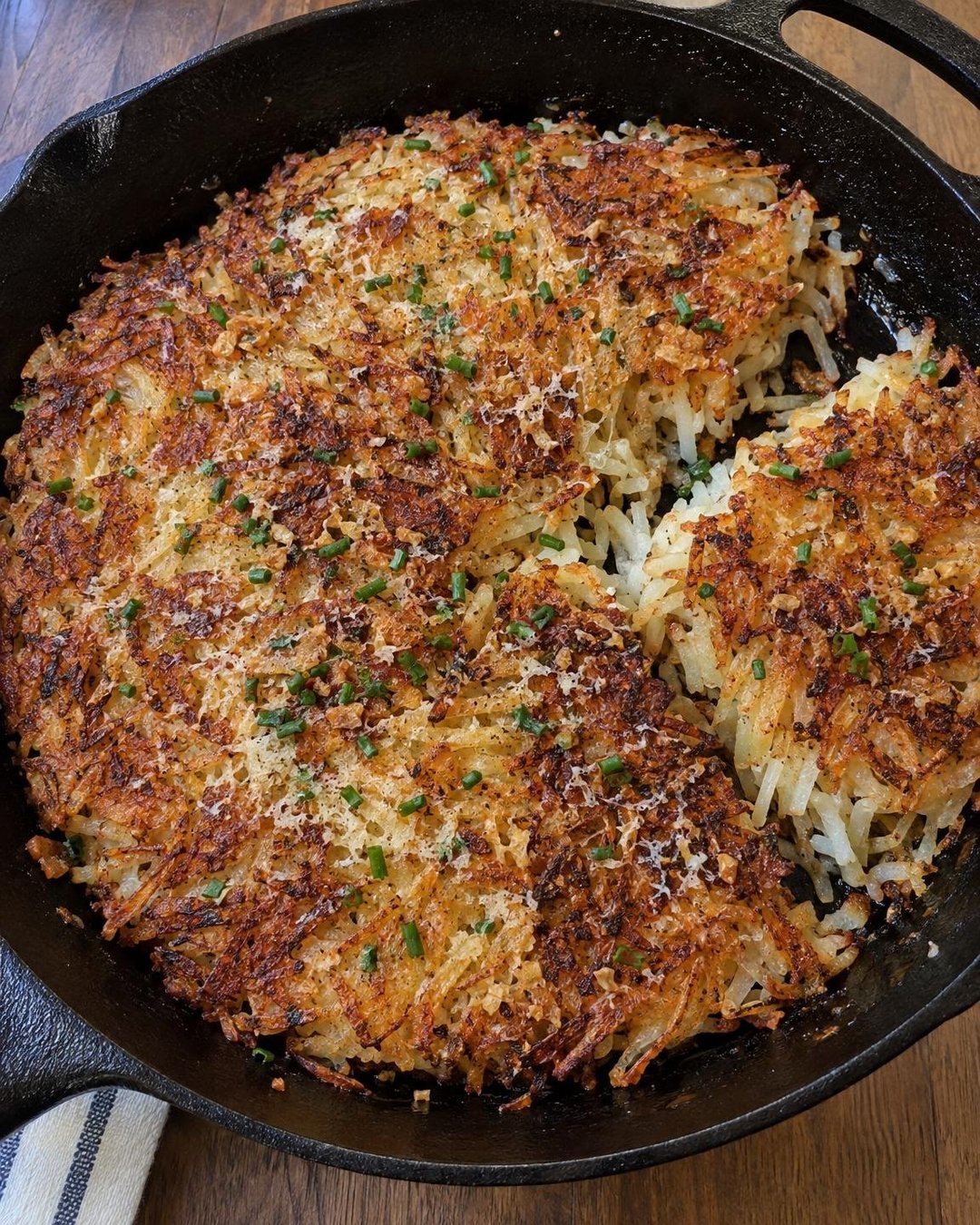
- Cook undisturbed for 6 to 8 minutes, until the bottom is a deep golden brown and crispy. Carefully flip the hash browns in sections using a wide spatula, then add the remaining 1 tablespoon of butter to the pan. Press each section down again and cook for another 5 to 7 minutes until the second side is equally golden and crispy.
- Remove from heat and immediately top with fresh chives and an optional extra sprinkle of Parmesan cheese. Taste and adjust seasoning with salt and pepper as needed. Serve hot and enjoy immediately!
Nutrition
Notes
Storage: Store leftover hash browns in an airtight container in the refrigerator for up to 3 days. Reheat in a hot skillet with a small amount of oil for 2 to 3 minutes per side to restore crispiness, or in the oven at 400°F for 10 to 12 minutes. To freeze, cool completely and freeze in a single layer before transferring to a freezer-safe bag for up to 2 months.
Lighter Swap: To reduce saturated fat, replace the butter entirely with olive oil or avocado oil. You can also use a reduced-fat Parmesan or reduce the cheese to ½ cup — the hash browns will still be super flavorful and nutritious without being heavy.
Sodium Tip: Since Parmesan cheese is naturally quite salty, hold back on salt initially and taste the mixture before cooking. You can always add more seasoning at the end, so start conservatively and season to your preference.